
Explore Our Research
(Click on any research topic to learn more)
Bioinspired Catalysis
Biological systems carry out complex chemical transformations that are essential for energy transduction and life-sustaining processes without relying on precious metals. These reactions are typically catalyzed by metalloenzymes, which use earth-abundant elements in sophisticated coordination environments. By understanding and mimicking the behavior of these natural catalysts, we aim to advance research in energy, sustainability, and chemical synthesis.
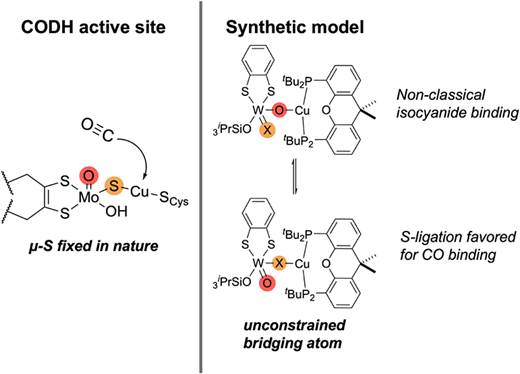
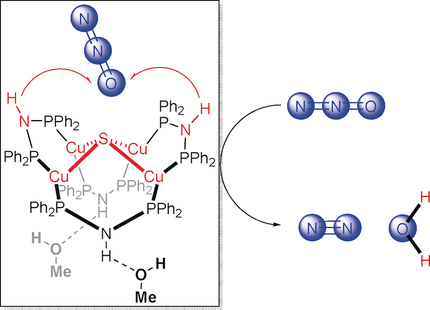
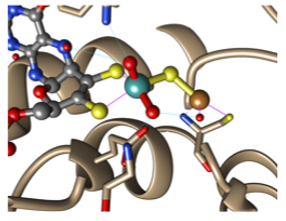
Our group approaches bioinspired catalysis in two complementary ways. First, we create structural models of metalloenzyme active sites to investigate their bonding, spectroscopy, and reactivity outside the protein environment. These synthetic analogues allow us to explore fundamental structure–function relationships. Second, we apply insights from those models to design functional mimics — compounds that reproduce key mechanistic features of the enzymes, even if their structures differ. Ultimately, we seek to develop catalysts for transformations relevant to energy storage, environmental remediation, and organic synthesis. Biological systems that have inspired our previous research include the tetranuclear CuZ cluster in nitrous oxide reductase (N₂OR) and the heterobimetallic Mo/Cu center in aerobic carbon monoxide dehydrogenase (CODH), both of which play critical roles in global nitrogen and carbon cycles.
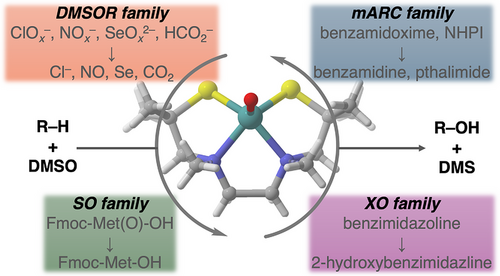
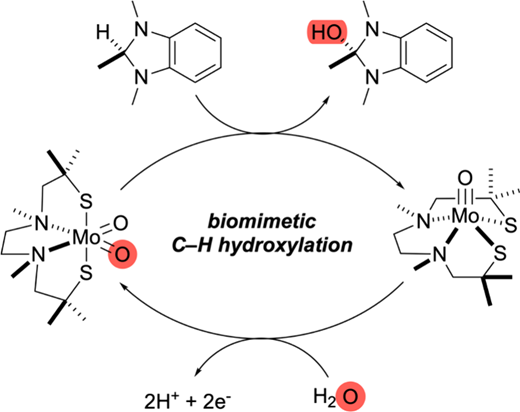
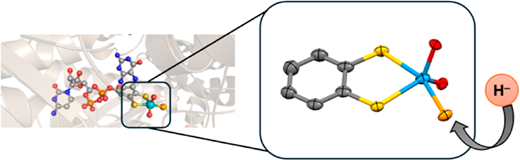
Currently, we are particularly focused on developing compounds inspired by the molybdenum cofactors (Moco’s) of molybdopterin enzymes, which are ubiquitous in all forms of life and catalyze diverse transformations such as oxyanion reduction (relevant to water purification) and C–H hydroxylation (relevant to selective organic oxidation) that we seek to mimic.
Currently, these projects are funded by NIH grant R35 GM140850.
Accepting new researchers:
Not accepting new researchers: